
Every car owner eventually faces a decision: grab the toolbox or pick up the phone. While plenty of maintenance tasks are perfectly safe for a confident do-it-yourselfer, other repairs carry real risks to your safety, your wallet, and your vehicle’s long-term reliability. Knowing where that line falls can save you from turning a small issue into an expensive, dangerous mistake. This guide breaks down the specific situations where handing the keys to a professional is the smarter move.
Assessing Your Own Skill Level Honestly

Before diagnosing any car problem, it helps to take an honest inventory of your own experience, tools, and available time. Watching a few online tutorials can teach you how to change wiper blades or a cabin air filter, but it does not automatically qualify you to handle work that involves safety systems or specialized equipment. Overestimating your abilities is one of the most common reasons simple jobs turn into costly repairs down the road.
Consider how comfortable you are working under a vehicle, using diagnostic tools, and reading a repair manual before starting anything beyond basic maintenance. If a job requires a lift, specialty torque specs, or calibration equipment you do not own, that is a strong signal it belongs in someone else’s hands.
- Ask yourself if you have the correct tools, not just similar substitutes
- Consider whether you have a safe, level space to work
- Think about how much downtime you can afford if something goes wrong
- Be realistic about your patience for troubleshooting unexpected problems
Recognizing Warning Signs That Point to Bigger Problems
Dashboard lights, unusual noises, and strange smells are your car’s way of flagging issues that often go deeper than they first appear. A grinding sound, a burning odor, or a persistent check engine light can indicate anything from a minor sensor glitch to a serious mechanical failure. Trained mechanics have the diagnostic equipment and experience to pinpoint the actual cause quickly, rather than guessing and replacing parts one at a time.
Relying on trial and error for these symptoms can waste money and delay the real fix. Many auto repair services now include computerized diagnostics as a standard part of an initial inspection, which gives you a clearer picture before any work begins. This kind of accurate assessment is difficult to replicate with a basic code reader at home.
- Persistent or flashing check engine lights
- Burning smells while driving or after parking
- Grinding, clunking, or squealing noises
- Fluid leaks of unknown origin
- Warning lights for airbags, ABS, or stability control
Why Brake Problems Deserve Immediate Professional Attention

Brakes are one system where cutting corners is simply not worth the risk. If you notice squealing, a soft pedal, pulling to one side, or vibration when stopping, it is time to schedule brake repair rather than attempting a fix yourself. Improperly installed pads, worn rotors, or air in the brake lines can lead to reduced stopping power exactly when you need it most.
A local auto brake service can also catch related issues, like a failing caliper or a leaking brake line, that are easy to miss without proper training. These technicians use specialized tools to bleed lines correctly and torque components to exact specifications. Given that your safety and the safety of others on the road depend on this system working flawlessly, this is a clear case for professional hands.
- Squealing or grinding when braking
- A spongy or sinking brake pedal
- Vehicle pulling to one side while stopping
- Vibration or pulsing felt through the pedal
- Dashboard brake warning light staying on
Suspension and Steering Issues That Go Beyond a Quick Fix
Suspension components affect how your car handles, how evenly your tires wear, and how well you stay in control during sudden maneuvers. If you notice excessive bouncing, uneven tire wear, or a clunking sound over bumps, these are signs that suspension repairs may be needed. This system involves precise alignment specifications and torque settings that are difficult to get right without professional-grade equipment.
Steering problems, such as a loose or vibrating wheel, often share the same root causes as suspension issues and should be diagnosed together. Attempting to replace struts, control arms, or bushings without the correct alignment tools can leave your vehicle unstable at highway speeds. Given the stakes involved in handling and braking performance, this is another area where professional evaluation is the safer choice.
- Excessive bouncing after hitting a bump
- Uneven or rapid tire wear
- Vehicle pulling or drifting during turns
- Clunking or knocking noises from the wheels
Handling Body Damage and Cosmetic Repairs the Right Way

Minor scratches and small dents might tempt you toward a DIY fix, but many cosmetic issues hide structural or paint-matching challenges that are hard to solve without the right setup. Auto body repair often involves color matching, panel alignment, and rust prevention steps that go beyond a basic touch-up kit. A job that looks simple on the surface can turn into a bigger headache if moisture gets trapped under improperly sealed paint.
Dent repairs, in particular, require specialized techniques depending on the size, depth, and location of the damage. Paintless dent removal works well for shallow dents without paint damage, but deeper dents often need filler, sanding, and repainting to blend seamlessly with the surrounding panel. Getting this wrong can actually lower your car’s resale value instead of improving its appearance.
- Dents near creases or panel edges
- Scratches that have penetrated to bare metal
- Rust bubbling under the paint surface
- Damage affecting door or hood alignment
Special Considerations for Truck Owners
Trucks often carry heavier loads, tow trailers, and cover more rugged terrain than the average sedan, which puts extra strain on drivetrain and suspension components. This means truck repairs frequently involve larger, heavier parts and different torque specifications than passenger vehicles. Attempting to service a truck’s braking or suspension system without the right lift and equipment can be both difficult and unsafe.
Owners who tow trailers or haul equipment regularly should pay close attention to wear patterns on tires, brakes, and hitch components. Because trucks are often relied upon for work, downtime from a botched repair can be more costly than the repair itself. Scheduling regular inspections helps catch small issues before they turn into major, expensive failures.
- Uneven wear from towing or heavy hauling
- Transmission shifting problems under load
- Suspension sag when carrying cargo
- Unusual vibration at highway speeds
When Electrical and Computer Diagnostics Are Involved
Modern vehicles rely on dozens of interconnected computer modules that control everything from the engine to the infotainment system. When something goes wrong electrically, tracing the issue often requires specialized scan tools that read manufacturer-specific codes, not just generic ones. Taking your car to an auto repair shop equipped with this technology can save hours of frustrating guesswork.
Wiring issues are especially tricky because a single loose connection can cause symptoms that seem unrelated to the actual problem. Attempting to chase down an electrical gremlin without proper training can lead to more wiring damage or even electrical fires in rare cases. Professional technicians are trained to isolate these issues methodically rather than replacing parts at random.
- Intermittent electrical failures that come and go
- Multiple warning lights appearing at once
- Battery drain with no clear cause
- Malfunctioning sensors affecting performance
Knowing the Difference Between Routine Maintenance and Complex Repairs
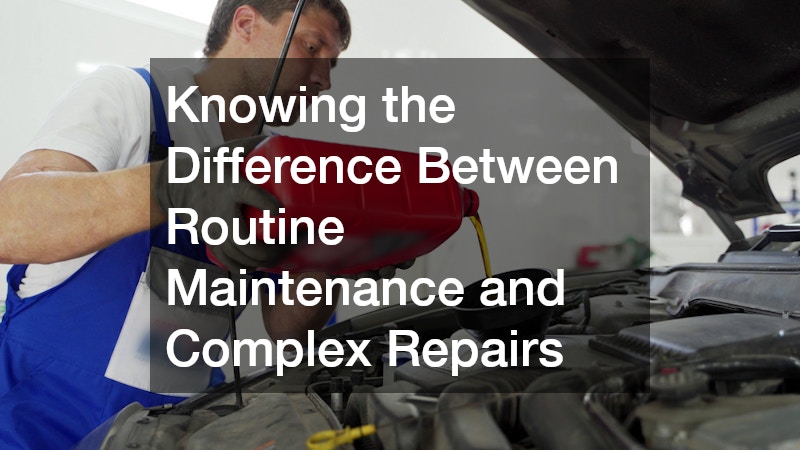
Not every car task requires professional help, and knowing where routine maintenance ends and complex repair work begins is key to making smart decisions. Oil changes, air filter swaps, wiper blade replacement, and battery terminal cleaning are generally safe for confident DIYers with basic tools, a bit of patience, and a good online tutorial. These jobs typically take under an hour, use inexpensive parts, and carry little risk if something is slightly off.
The calculation changes quickly once a task involves multiple interconnected systems, safety components, or manufacturer-specific procedures. Brake repairs, for example, might look like a simple pad swap but often require precise torque specs, rotor inspection, and knowledge of how the ABS system interacts with hydraulic pressure. Similarly, anything touching the timing belt, suspension, airbags, or transmission carries a much higher margin for error, where a small mistake can cause expensive damage or create a genuine safety hazard.
Another useful marker is whether the job requires specialized diagnostic equipment or software resets. Many modern vehicles need a scan tool to clear codes, recalibrate sensors, or program new parts correctly after a repair. When a task crosses into that territory, it usually falls under broader auto services best left to trained technicians who have the right equipment, training, and manufacturer documentation on hand.
Routine maintenance like oil changes, air filter swaps, and wiper blade replacement generally involves basic tools, forgiving tolerances, and low risk if something goes slightly wrong. Complex repairs live in a different category entirely. Timing belt replacements, transmission work, and head gasket repairs are good examples of jobs that look straightforward in a video but carry serious consequences if done incorrectly.
These repairs often require specialized tools, exact torque sequences, and sometimes computer recalibration afterward. A timing belt installed even a few degrees off can cause valves to strike pistons the moment the engine turns over, leading to catastrophic internal damage. Transmission work frequently demands precise fluid pressure specs and electronic relearning procedures that home garages simply aren’t equipped to handle.
- Oil and filter changes are typically DIY-friendly, requiring only basic tools, a jack, and about 20-30 minutes
- Timing belt and chain replacements usually require expert tools and precise timing marks, since a single error can cause the engine to run poorly or suffer serious internal damage
- Transmission repairs involve complex internal components like clutch packs, valve bodies, and solenoids that demand specialized diagnostic equipment to test properly
- Head gasket work demands precise torque sequences (often in multiple stages) and proper sealing procedures, as improper installation can lead to coolant leaks or warped cylinder heads
- As a rule of thumb, if a job requires disassembling the engine, transmission, or drivetrain, it’s usually best left to a certified mechanic with the right training and equipment
Weighing the True Cost of DIY Versus Professional Work
A DIY repair might seem cheaper upfront, but the real cost includes your time, the tools you may need to purchase, and the risk of making a mistake that requires a second repair. A torque wrench, jack stands, or a diagnostic scanner can easily add $100-$300 to a “simple” job, and that’s before factoring in the hours spent watching tutorials or making a parts-store run for the one fitting you didn’t know you needed.
Factoring in these hidden costs often narrows the gap between doing it yourself and paying for professional work. A brake job might save you $150 in labor, but if a caliper bolt is over-torqued or a line is improperly bled, you could end up paying a shop to fix your fix, plus the cost of a tow if the car isn’t safe to drive.
The key is matching the complexity and risk of the job to your actual skill level, not just your willingness to try. Ask yourself whether a mistake would simply cost you a wasted part (low risk) or potentially damage a $1,000 component, void a warranty, or compromise safety systems like brakes and airbags (high risk). If the job requires specialized diagnostic equipment, torque specifications, or fluid disposal you’re not equipped to handle, the “savings” often evaporate once you factor in tool purchases or a botched repair.
When in doubt, a quick conversation with a trusted shop can help you decide which path makes more financial sense. Many shops will give a rough labor estimate over the phone at no charge, which lets you compare it directly against your own time, tools, and tolerance for risk before committing to either route.
- Factor in tool costs, not just parts — a torque wrench, jack stands, or diagnostic scanner can easily add $100-$300 to a “simple” repair
- Consider the value of your time and potential lost wages, especially if a job estimated at 2 hours stretches into a full weekend
- Account for the risk of repeat repairs from mistakes, which can mean buying the same part twice or paying a shop to redo the work
- Weigh warranty coverage that DIY work may void, particularly on newer vehicles, transmissions, or emissions systems
- Check whether special software or manufacturer tools are required, since some repairs simply can’t be completed without dealer-level equipment
- Factor in disposal costs for fluids, batteries, and tires, which many shops handle for free but municipalities may charge for separately
Deciding between DIY and professional car care ultimately comes down to safety, complexity, and your honest comfort level with the job at hand. Simple maintenance tasks can absolutely be handled at home with the right tools and a bit of research, but brakes, suspension, electrical systems, and body damage are areas where expertise truly matters. The next time you notice a warning sign you are unsure about, take a moment to weigh the risks before reaching for a wrench. When in doubt, scheduling an inspection with a qualified professional is a small investment that can prevent much larger problems down the road.